
The Pentagon's First UAP File Release: What's in It, What's Missing, and What Comes Next
5/10/2026
The Pentagon's First UAP File Release: What's in the Files
On May 8, 2026, the Department of War released the first batch of declassified UAP files under the Presidential Unsealing and Reporting System for UAP Encounters, known as PURSUE. Videos, photos, and original source documents are now publicly accessible at WAR.GOV/UFO.
This is first batch. More are coming on a rolling basis.
What Was Released
The initial drop includes 162 files in total: 120 PDF documents, 28 videos, and 14 images, drawn from the FBI, the Department of Defense, NASA, and the State Department.
The roughly two dozen videos run for a total of 41 minutes and cover reported encounters from around the world between 2020 and 2026. Most feature infrared camera footage tracking white objects(in infrared this means the object is giving off heat) moving through the air. A report accompanying one video taken in Greece in 2023 noted the object was making multiple 90-degree turns at approximately 80 miles per hour.
One video shows an object described as resembling a football shape near Japan, reported by U.S. Indo-Pacific Command(USINDOPACOM). Another from Syria shows two semi-transparent, irregularly shaped orange areas each appearing for two seconds. One pilot described seeing a triangular metallic UAP flying at 25,000 feet over the Mediterranean.
The documents cover a wide geographic and institutional footprint. Incident reports come from military personnel in Iraq, Syria, the Persian Gulf, the Strait of Hormuz, the Gulf of Aden, Greece, and elsewhere. State Department cables from diplomats in Papua New Guinea, Kazakhstan, Turkmenistan, Georgia, and Mexico detail various UAP incidents, with dates ranging from 1985 to late 2025.
The historical record reaches back decades. Documents detail the 1947 Roswell incident, including an FBI field memo in which an Air Force major reported that an object purporting to be a flying disc had been recovered near Roswell, New Mexico, described as hexagonal in shape and suspended from a balloon approximately twenty feet in diameter.
NASA transcripts from 1969 are also included, among them one in which Apollo 11 astronaut Buzz Aldrin reported observing what appeared to be a fairly bright light source, which he tentatively described as a possible laser. Apollo 12 images showing unidentified phenomena above the lunar surface are part of the release as well.
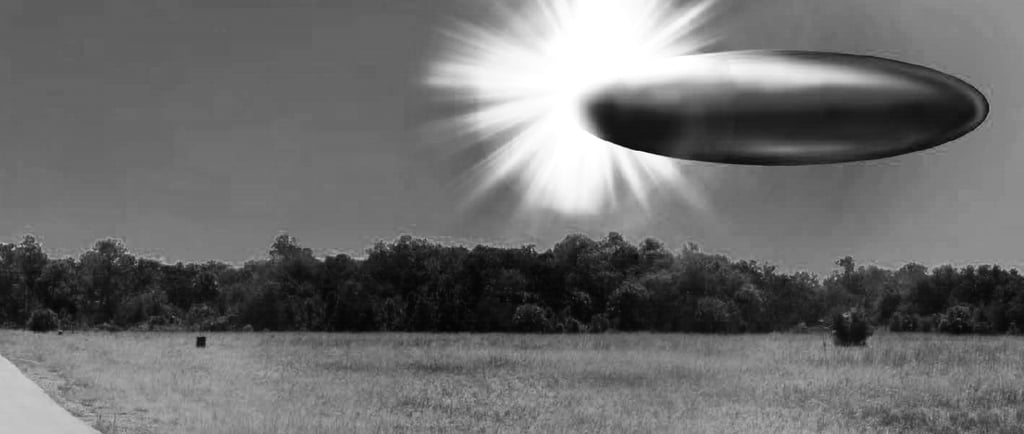
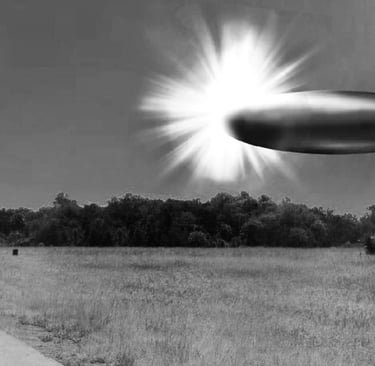
FBI eyewitness files round out the historical portion. One FBI report describes a super-hot orb hovering over the ground that traveled 20 miles at a speed too fast for the helicopter sent to pursue it. Another includes a composite sketch(the image at the start of the article) of what a witness described as an apparent ellipsoid bronze metallic object materializing out of a bright light in the sky, estimated at 130 to 195 feet in length, and disappearing instantaneously.
What the Files Don't Say
The government stops short of calling any of this extraterrestrial or otherwise. That's expected, if this is an earnest attempt at disclosure it will be drawn out over months if not years. What the files do establish is that a significant volume of encounters, spanning decades and multiple military theaters, remain genuinely unresolved. The official press release is explicit: many of these materials have not yet been analyzed for resolution of any anomalies. You are getting the raw record, not conclusions.
What stands out is the breadth of what the government is willing to put on record without explanation. Transmedium movement, UAPs spotted during Gemini missions, instant acceleration, formation flight, objects outpacing military aircraft sent to intercept them. None of it is known. None of it is dismissed. Unresolved is not the same as explained, and the volume of unresolved incidents in this release is not small.
What Inquire Got Right — and Wrong
Before the release, Inquire published a preview laying out what to expect. Now that Batch 1 is public, it's worth being direct about where that analysis held and where it didn't.
We got the structure right. We predicted the government would confirm UAP as real and recurring, stop short of attributing origin, acknowledge that more records exist, and frame this as the first of multiple releases. All of that held. Pentagon officials confirmed this is the first wave, with subsequent tranches expected in the coming months.
We got the scope wrong. Our preview focused heavily on the 46 specific videos demanded by Rep. Luna and the House Oversight Task Force. The actual release went considerably broader — 162 files spanning seven decades and multiple agencies, rather than a targeted fulfillment of the congressional demand list. The inclusion of Apollo-era NASA transcripts, State Department diplomatic cables, and decades of FBI eyewitness files was wider than we projected. A
We also framed the worst case as videos being withheld entirely. That didn't happen, but none of the videos released were the ones requested by Rep. Luna. While the format exceeded our worst case, the analytical depth is closer to it. Raw footage without resolved conclusions is closer to a paper dump in practical terms, even when the paper includes video and a tab on the DOW website.
The best-case scenario we described, AARO issuing a companion statement acknowledging genuinely anomalous encounters, followed by emergency congressional hearings and a sustained media cycle, has not materialized with Batch 1. At this point there does not appear to be anything truly revelatory, and the release looks more like more of the same. If they continue with more batches as they promised this is a great start.
What Comes Next
Additional files will continue to be uploaded to WAR.GOV/UFO on a rolling basis. Each release will expand the official record. The current files include redactions protecting eyewitness identities, government facility locations, and sensitive military site information — meaning while they redacted names they didn't redact what's important.
For organizations in aerospace, defense, critical infrastructure, and energy, the relevant question is not about origin. It is whether the documented behaviors: rapid acceleration, unconventional flight paths, transmedium movement, sensor anomalies, etc. have implications for airspace safety, infrastructure security, and the reliability of detection systems your operations depend on.
Inquire will continue tracking PURSUE releases and publishing sector-specific breakdowns as new material becomes available. Contact us if your organization needs a structured risk assessment tied to the expanding disclosure process.