
The Second Domino: What PURSUE Release 02 Actually Shows Us
5/24/2026
What's in Release 02
The document and video bundle spans a remarkable range of agencies and time periods. Among the most notable materials:
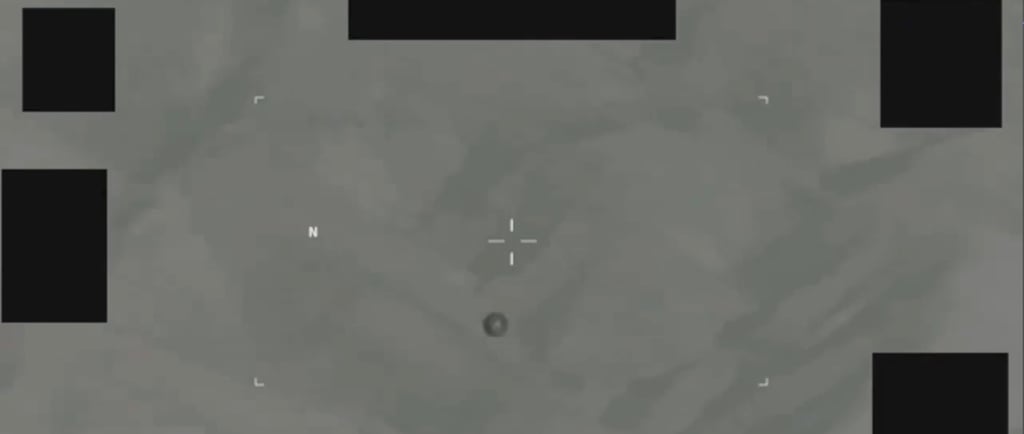
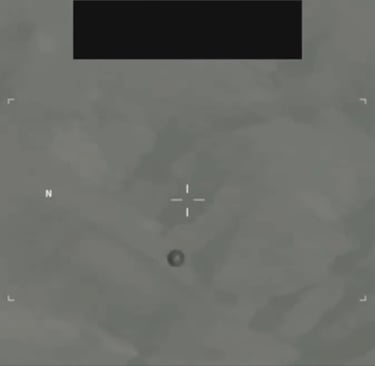
Sensor footage consistent with the imagery seen in Release 01, including infrared and EO/IR video of objects operating at altitude with no visible propulsion or control surfaces. Several clips show small, dark spherical objects against cloud backgrounds, the kind of footage that a trained ISR analyst would flag immediately as anomalous.
A collection of UAP reports and correspondence from Sandia National Laboratories dating from 1948 to 1950, one of the United States' most sensitive nuclear weapons facilities, then and now. The significance of UAP activity proximate to nuclear infrastructure has been a thread running through credible UAP research for decades. Its appearance in an official, declassified government release is no longer a claim advocates make. It is now a documented fact.
A CIA Intelligence Information Report from 1973 describing a UAP sighting in the USSR. The declassification of active intelligence collection on UAP from a peer adversary's airspace during the Cold War carries implications that extend well beyond the UAP file itself. It confirms that major intelligence services were devoting collection resources to this phenomenon at the height of the Cold War.
An ODNI narrative from a senior U.S. intelligence community official describing a UAP encounter firsthand.
An Apollo 12 medical debriefing from NASA. The inclusion of NASA materials, particularly from a crewed lunar mission, is a significant expansion of the source base beyond purely military contexts.
And the F-16C intercept over lake Huron footage. An Air Force National Guard F-16C on record as engaging and shooting down a UAP. If you'll remember this took place during the balloon and UAP shoot downs of early 2023. The video shows the sensor lock on and a confirmed impact on the target.
What This Release Changes
The first release established the government's posture: these are unresolved cases, the government cannot explain them, and private sector analysis is explicitly welcomed. The second release expands the evidentiary base and the time horizon. We are no longer looking at a post-2004 phenomenon with a handful of Navy FLIR clips. We are looking at a documented record that spans Truman, Eisenhower, the Cold War, the Apollo program, post-9/11 operations, and current military activity.
The rolling release structure, with a third tranche already in preparation, means this is not a one-time document dump. It is a disclosure architecture. Each release will add to the public record. Each release will require organizations to reassess what they knew, what their personnel may encounter, and what their protocols require.
Secretary Hegseth's statement with Release 02 framed the classification itself as the problem, describing files hidden behind classifications that fueled justified speculation. That framing is consequential. It positions the previous classification regime not as prudent security management but as a failure of public accountability. For organizations that operate under security frameworks, that is a regulatory and reputational signal worth analyzing carefully.
What Organizations Should Be Doing Now
The PURSUE releases are not merely of academic interest. They are primary source material that any organization in a regulated, defense-adjacent, or infrastructure-critical sector should be treating as an input to risk planning.
The geographic spread of Release 02, from New Mexico nuclear sites to Iranian airspace to the East Coast, suggests no operational theater is categorically exempt from UAP activity. Organizations with assets, personnel, or operations across those geographies should revisit their anomalous phenomena protocols.
The inclusion of nuclear facility records should prompt immediate review by any organization with nuclear adjacency. The pattern of UAP activity near nuclear infrastructure is now an officially documented phenomenon, not a speculative claim.
The F-16 intercept footage confirms that UAP encounters can escalate to kinetic military response. Any organization with assets in or near restricted military airspace should understand that the operational environment now includes this possibility as a documented precedent.
The rolling release cadence means this will not resolve on its own timeline. A third release is coming. Organizations that wait for the full picture before building readiness frameworks are making a structural decision to react rather than prepare.
PURSUE Release 02 is available in full at WAR.GOV/UFO.
Our new reality is becoming clear. The question now is whether your organization has the framework to rise to it.